
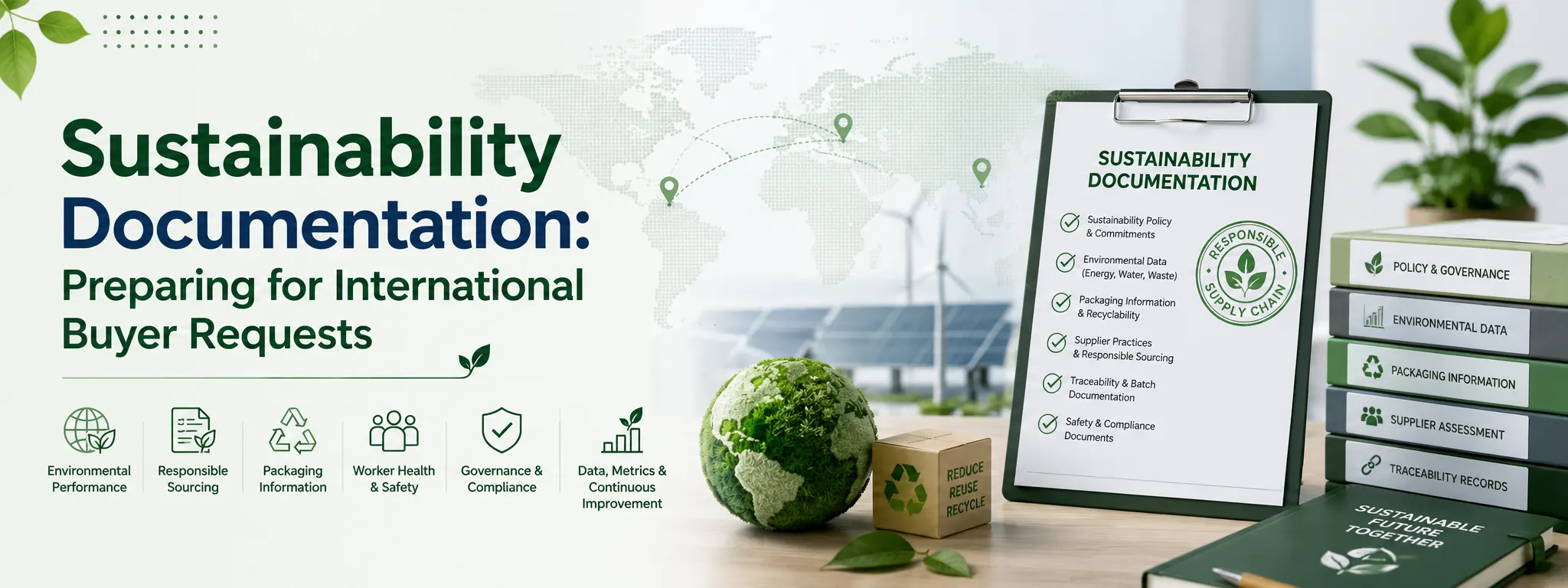
Sustainability Documentation: Preparing for International Buyer Requests
International B2B customers increasingly request sustainability, environmental, packaging and supply-chain information as part of procurement and supplier-qualification processes.
The strongest response is not a broad sustainability claim. It is a clear evidence pack built around actual data, responsible processes and transparent limitations.
Why Buyers Are Asking
Buyer requests commonly relate to:
- Product origin and traceability
- Environmental performance
- Packaging material and waste
- Worker health and safety
- Supplier governance and responsible-business practices
- Chemical safety and safe-use documentation
Requirements differ by customer, country and product.
Buyers may need this information to support:
- Procurement decisions
- Environmental reporting
- Packaging obligations
- Risk-based due-diligence processes
The Minimum Sustainability Evidence Pack
1. Sustainability and Traceability Policy
A practical policy should explain commitments relating to:
- Responsible sourcing
- Safe operations
- Quality
- Environmental improvement
- Transparent communication
Avoid broad claims such as:
- “Zero waste”
- “Carbon neutral”
- “Fully sustainable”
unless they are supported by a defined methodology and current evidence.
2. Product and Batch Documentation
For each supplied batch, maintain relevant documentation such as:
- Product specification
- Certificate of Analysis
- Safety Data Sheet
- Batch identification
- Packaging identification
- Shipment documentation
- Destination-market documentation
- Available source and chain-of-custody information
This helps demonstrate that sustainability commitments are connected to real supply controls.
Environmental Data
Start with information that can be measured consistently.
Useful data points may include:
Where possible, organisations can use intensity metrics such as:
or
Packaging Information
For each packaging format, maintain information on:
- Container type
- Container material
- Container weight
- Closure type
- Secondary packaging materials
- Dangerous-goods suitability
- Verified recycled content, where available
- Recyclability information, where available
- Opportunities to reduce unnecessary secondary packaging
Safety remains the priority. Packaging for hazardous materials must remain suitable for the product and its transport classification.
Supplier and Worker Practices
Customers may ask whether suppliers address areas such as:
- Worker safety
- Responsible employment
- Environmental responsibility
- Anti-bribery
- Lawful sourcing
Useful records can include:
- Incident records
- Corrective-action records
- Process for reporting and escalating material concerns
How to Start Without Overclaiming
A credible sustainability programme begins with a baseline.
Step 1
Assign internal owners for quality, supply-chain and sustainability data.
Step 2
Create a regular record for:
- Energy
- Water
- Waste
- Packaging
Step 3
Maintain batch-level traceability records.
Step 4
Request key documentation and responsible-business declarations from direct suppliers.
Step 5
Set at least one measurable annual improvement target.
Step 6
Publish only claims supported by current evidence.
The Arenico Approach
Arenico is developing a responsible-supply approach built around:
- Quality documentation
- Traceability
- Practical environmental data
- Supplier accountability
If you have a supplier questionnaire, sustainability scorecard or packaging-information request, sharing it before purchase confirmation allows the available information and requirements to be reviewed before supply.
Discuss Sustainability Requirements